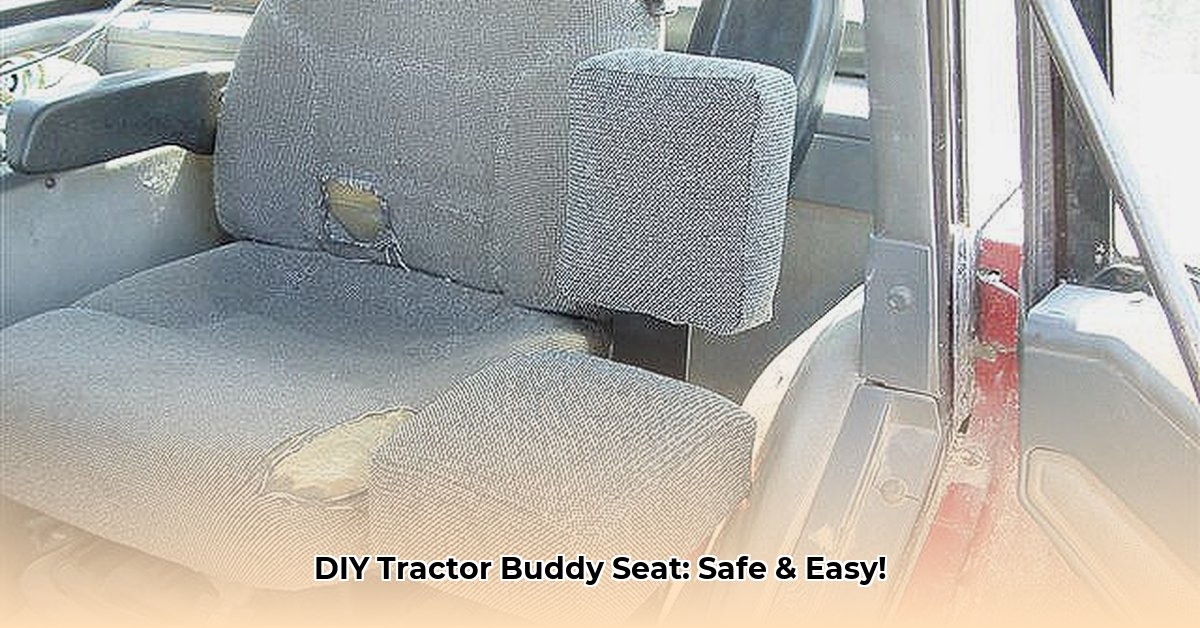
Ever wished for an extra set of hands (or a happy passenger) while working the farm? A homemade tractor buddy seat might be the answer! But safety is paramount. This guide provides step-by-step instructions for building a sturdy, safe, and comfortable buddy seat for your tractor. We'll cover materials, construction, crucial safety considerations, and troubleshooting tips, drawing from both expert advice and real-world experiences from online forums like TractorByNet 1. For more tractor implement ideas, check out these other helpful resources.
Planning Your Homemade Tractor Buddy Seat: Prioritizing Safety and Comfort
Before starting, carefully plan your seat's design and function. Who will be the passenger? An adult? A child? The weight capacity directly impacts the materials and construction. A child's seat will require a drastically different approach than one for an adult. Remember, a poorly designed seat is not just uncomfortable; it's dangerous. Do you have existing mounting points on your tractor you can use? This significantly simplifies installation. But ensure the new seat doesn't interfere with tractor operation. A crucial step is sketching your design to ensure everything fits correctly and is ergonomically sound for both driver and passenger.
Gathering Your Supplies: A Detailed Materials List
This list provides starting quantities. Adjust based on your specific design. Higher-quality materials often ensure a more durable and safer end product:
| Material | Quantity | Notes |
|---|---|---|
| Steel tubing (1-inch diameter) | 8-10 feet | For the frame. Thicker tubing (e.g., 1.5 inches) is recommended for heavier passengers. |
| Steel plate (1/8-inch thick) | 2 sq. feet | For the base and mounting brackets. Consider thicker plate for added strength. |
| Plywood (3/4-inch thick) | 1 sq. foot | For the cushion base. Marine-grade plywood offers superior weather resistance. |
| Waterproof/weatherproof fabric | Sufficient | To cover the cushion. Choose a durable, UV-resistant fabric. |
| Heavy-duty seat belt | 1 | Crucial for safety! Ensure it meets or exceeds the weight capacity of the intended passenger. |
| Bolts, nuts, washers | Assortment | Various sizes will be needed. Get an assortment to ensure you have what you need. |
| Welding supplies | As needed | Welding rod, gloves, eye protection – safety is paramount! |
| Rust-resistant paint | As needed | Protects the metal from rust and improves the overall appearance. |
Building Your Homemade Tractor Buddy Seat: A Step-by-Step Guide
Safety Note: Welding requires appropriate safety equipment and precautions. If you're unfamiliar with welding, enlist the help of an experienced welder.
Design and Cut: Sketch your seat frame. Accurately measure and cut the steel tubing to the precise lengths needed, accounting for overlaps at connection points.
Weld the Frame: Carefully weld the tubing sections together, ensuring strong and even welds. A strong, rigid frame is essential for safety.
Attach the Base: Weld the steel plate securely to the frame. This forms the foundation for the seat cushion.
Construct the Cushion: Attach the plywood to the steel base, creating a sturdy support for the cushion. Cover the plywood with weather-resistant fabric, securing it tightly with staples or screws.
Install the Seat Belt: Attach the heavy-duty seat belt to the frame using robust mounting points. Ensure the belt is securely fastened and properly adjusted for the anticipated passenger. Test the belt's function thoroughly before use.
Mount the Seat: Attach the finished seat to your tractor, preferably using existing mounting points. Test the seat's stability by carefully rocking it; it must remain firmly in place.
Finishing Touches: Apply a coat of rust-resistant paint, allowing it to dry completely before use.
Safety First: Critical Considerations for Your Homemade Seat
- Weight Limits: Clearly label the maximum weight capacity of your seat. Never exceed this limit. Overloading can lead to catastrophic failure.
- Child Safety: For children, consider adding additional restraints, such as a harness or netting. Never leave a child unattended on a tractor.
- Regular Inspection: Regularly inspect all welds, bolts, and the seatbelt for any signs of wear or damage. Tighten any loose fasteners immediately.
- Seatbelt Usage: Always use the seat belt. It's your primary safety feature.
Troubleshooting Tips: Addressing Potential Issues
- Weak Welds: If a weld feels weak, re-weld it, ensuring deep penetration. Let it cool completely before use.
- Loose Fasteners: Tighten any loose bolts or nuts immediately. Consider using locking washers to prevent future loosening.
- Uncomfortable Seat: Add more padding or adjust the existing padding to improve comfort.
Building a homemade tractor buddy seat is a rewarding project, but safety always takes precedence. This guide aims to provide the necessary information to build a safe and functional seat. Remember, a well-built seat enhances both comfort and safety while working on your farm. Happy farming!